



Details
2
0
Save
Authored by Dr. Christelle Bou Mitri
10 minutes
Aug 24, 2026


Authored by Dr. Christelle Bou Mitri
The global food system is undergoing a profound transformation. Consumers are increasingly transitioning toward plant-based diets driven by health concerns, digestive comfort, environmental sustainability, ethical considerations, and changing lifestyles. While the market for plant-based dairy alternatives continues to expand, most commercially available products are designed to imitate Western dairy products and often lack nutritional quality, cultural relevance, and scientific validation. Traditional fermented dairy products, deeply rooted in Mediterranean diets such as yogurt and labneh, remain largely unexplored despite their nutritional importance and cultural value.
At the same time, pulses such as chickpeas (hommos) and white beans represent highly sustainable protein sources. Compared with cow's milk production, they require substantially less land and water, emit fewer greenhouse gases, enrich soils through nitrogen fixation, and contribute to resilient agricultural systems. Despite these advantages, little research has investigated their potential for producing fermented dairy alternatives while preserving the sensory identity of traditional foods. This gap provided the foundation for my research program.
As a food scientist specializing in fermentation, food innovation, formulation, and product development, my research focuses on translating scientific discoveries into innovative food products that improve both human and planetary health. Over the past fifteen years, I have combined expertise in food chemistry, fermentation, formulation, sensory science, consumer behavior, and food development to develop sustainable food solutions that address real consumer needs. My work bridges fundamental science with industrial application, allowing research findings to be transformed into products with commercial and societal impact.
Rather than simply developing another plant-based product, my vision has been to build a complete scientific framework that begins with understanding consumers, using fermentation, formulation, and food-processing technologies, and ends with evidence-based product innovation.
The research follows a continuous pathway:
This integrated approach ensures that innovation is driven by both consumer expectations and scientific evidence.
The research program has generated one of the most comprehensive investigations of plant-based dairy alternatives by combining consumer science, fermentation technology, processing technologies, food formulation, nutrition, and health.
The research started by asking a simple question:
Why are consumers choosing plant-based dairy alternatives?
What are the motives and barriers for consumption of plant-based dairy alternatives among different populations and sociodemographic groups?
Consumer perception studies conducted locally and internationally demonstrated that health—not sustainability—is the primary motivation behind consumption.
Several studies had been conducted or are underway. A systematic review and a book chapter had been published. Comparison of Gen Z perception of plant-based alternatives is currently conducted with researchers from different countries using the same questionnaire.
A large international study involving more than 42,000 consumers across 14 countries revealed that health is consistently the strongest driver of plant-based dairy alternative consumption.
Additional studies conducted in three countries further confirmed these findings while exploring consumer expectations regarding plant-based beverages.
These results demonstrated that digestive comfort and gut health are central motivations influencing purchasing decisions, providing the scientific rationale for developing fermented plant-based dairy products with enhanced functional properties.
Guided by consumer expectations, the research shifted toward product innovation.
For the first time, fermented plant-based alternatives to traditional Lebanese dairy products, including labneh and yogurt, were developed using locally available pulses such as chickpeas and white beans.
The work optimized every stage of production, including:
The research demonstrated that fermentation successfully transformed pulse-based beverages into creamy fermented products with sensory properties comparable to traditional dairy products.
Among numerous formulations tested, an optimized formulation containing 80% white beans and 20% chickpeas produced the highest consumer acceptance while closely resembling conventional labneh in texture, flavor, appearance, and nutritional quality. Furthermore, the research established, for the first time, the feasibility of producing fermented plant-based labneh using pulse proteins while identifying critical processing parameters influencing gel formation and sensory acceptance.
Developing acceptable products represented only part of the journey.
The next phase evaluated whether these fermented products could deliver measurable health benefits.
Current studies investigate:
Results are still under investigation, and further assessments are underway. Necessary funds are needed to complete the studies.
Promising findings support future health claims for plant-based fermented foods.
This work goes far beyond replacing dairy.
It demonstrates how traditional foods can be reimagined using sustainable local ingredients without compromising their cultural identity.
It creates new opportunities to:
Most importantly, it connects consumer expectations directly with food innovation, ensuring that products are scientifically sound, nutritionally meaningful, and acceptable to consumers.
One of the greatest strengths of this research has been its international and multidisciplinary nature.
Working on this project has allowed me to establish collaborations with researchers across five continents, combining expertise in food science, microbiology, nutrition, consumer behavior, fermentation, sensory science, and product development.
The project has fostered collaborations with researchers from Canada, Australia, the United Kingdom, Sweden, Italy, Mexico, Brazil, and several other countries through joint research projects, international mobility, laboratory exchanges, conferences, and multidisciplinary research initiatives.
These collaborations have substantially expanded the scientific depth of the project and accelerated the translation of research findings into practical food innovations. The global collaboration map of the plant-based alternative to dairy is presented visually in Figure 1.
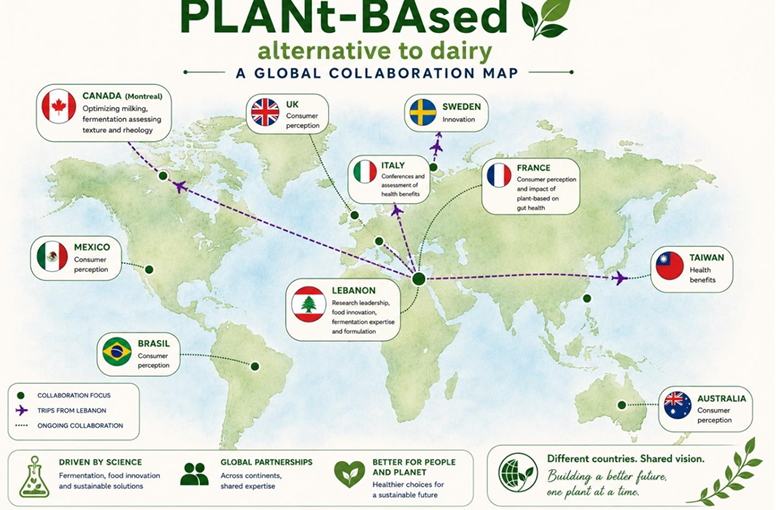
Figure 1. The global collaboration map of the plant-based alternative to dairy.
The research has progressed through successive and interconnected stages and milestones presented in Figure 2.
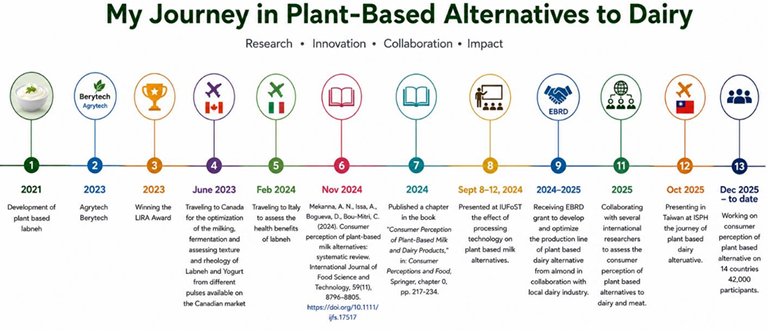
Figure 2. My journey in plant-based alternatives to dairy.
This research has been supported through competitive national and international funding, including FRQ–AUF–CNRS, CIHEAM Bari, Higher Education Capacity Development Program (HECD)–USAID, EBRD, Agrytech, Swedish Institute, and international industry collaborations.
It was presented at two international conferences.
Its impact has also been recognized through prestigious awards, including the IRALEB–Konrad-Adenauer-Stiftung Innovation Award, reflecting the successful translation of research into innovative food solutions with societal impact.
The next phase of this research will extend beyond product development toward precision fermentation, functional food innovation, and evidence-based nutrition. Future work will focus on optimizing fermentation processes to enhance the generation of bioactive compounds that promote gut health, improve digestive comfort, and support metabolic health.
By integrating food science, microbiome research, and precision nutrition, the goal is to develop personalized plant-based fermented foods tailored to the nutritional needs and health profiles of different population groups.
Ultimately, this research aims to establish a new generation of sustainable fermented foods that preserve traditional culinary heritage while delivering scientifically validated health benefits and meeting the nutritional, environmental, and well-being expectations of future consumers.
Christy Raad (2022). Development of Plant-Based Strained Yogurt. Thesis.
https://ir.ndu.edu.lb:8443/xmlui/bitstream/handle/123456789/1549/Christy%20Raad%20Thesis.pdf?sequence=1
Isabella Nyambayo, Dora Marinova, Diana Bogueva, Ghenwa Sarieddin, and Christelle Bou-Mitri (2024). “Consumer Perception of Plant-Based Milk and Dairy Products.” In Diana Bogueva (Ed.), Consumer Perceptions and Food, pp. 217–234, Springer.
Alexandria Nivelle Mekanna, Aline Issa, Diana Bogueva, and Christelle Bou-Mitri. “Consumer Perception of Plant-Based Milk Alternatives: Systematic Review.” International Journal of Food Science and Technology, Volume 59, Issue 11, November 2024, pp. 8796–8805.
https://doi.org/10.1111/ijfs.17517
FNHS Dr. Christelle Bou-Mitri Advances Food Science Research in Collaboration with the University of Parma.
https://www.ndu.edu.lb/news-and-events/news/fnhs-christelle-bou-mitri-advances-food-science-research-in-collaboration-with-the-university-of-parma
FNHS’s Dr. Christelle Bou-Mitri Granted Short-Term Scientific Mission at McGill.
https://www.ndu.edu.lb/news-and-events/news/fnhs-christelle-bou-mitri-granted-short-term-scientific-mission-at-mcgill
Higher Education Capacity Development Program.
https://www.linkedin.com/posts/thanks-to-usaids-support-through-hecd-dr-ugcPost-7242063914610421761-9nJO/
NDU at the Heart of International Research on Eating Habits.
https://today.lorientlejour.com/article/1443721/ndu-at-the-heart-of-international-research-on-eating-habits.html
NDU Faculty at the International Society for Precision Health 2025 Conference in Taipei.
https://www.facebook.com/NDULebanon/posts/dr-jacqueline-doumit-dr-aline-issa-and-dr-christelle-bou-mitri-from-fnhs-were-in/1242388924589602/