






Details
3
0
Save
Authored by Dr. Esther Ghanem
10 minutes
Aug 24, 2026



Authored by Dr. Esther Ghanem
Nanoemulsion-Based Antifungal Formulation with Essential Oils and Encapsulated Probiotics for Advanced Topical Applications
Industrial Partner: Mr. Elias Farah, Founder and Lead Designer, Healthy Foot by N
Superficial microbial infections of the skin and nail structures, most notably onychomycosis, present an enduring clinical challenge worldwide. These infections are characterized by high recurrence rates, sluggish treatment responses, and an alarming escalation in antimicrobial resistance against conventional therapeutic formulations.
The ZeroFung project introduces a sophisticated commercial solution: an advanced topical delivery framework combining bio-optimized essential oil (EO) mixtures with encapsulated probiotics, stabilized within an oil-in-water (o/w) nanoemulsion vehicle. By transitioning volatile, hydrophobic bulk botanicals into engineered sub-micron droplets, the formulation dramatically improves tissue penetration through the dense keratinized nail matrix while enhancing chemical stability.
Rigorous dynamic light scattering (DLS) testing confirmed that our premier formulation—an engineered blend of Oregano (Origanum vulgare) and Lemongrass (Cymbopogon citratus)—achieved a highly stable droplet size of 148.5 nm and an optimal polydispersity index (PDI) of 0.272.
In vitro bio-assays demonstrated that while bulk essential oils achieved complete bacterial eradication but only minor antifungal efficacy, the nanoemulsion vehicle triggered a remarkable upgrade in performance, resulting in a 74 mm near-complete zone of inhibition against pathogenic yeast.
Supported by a strategic partnership with Healthy Foot by N, the ZeroFung project bridges academic excellence and commercial translation, presenting a scalable, high-margin asset tailored for the expanding organic dermo-cosmetic market.
Topical dermatological conditions affecting the extremities, particularly persistent nail pathogens, carry substantial clinical and cosmetic significance. Onychomycosis is highly prevalent, yet current medical treatment pathways are fundamentally flawed.
Oral azole antifungals carry significant hepatotoxicity and necessitate strict laboratory monitoring, rendering them unviable for large patient demographics. Conversely, conventional topical lacquers exhibit abysmal cure rates due to their inability to cross the highly cross-linked keratin barriers of the nail plate.
Natural plant-derived essential oils display rich chemical diversity, including phenolics, terpenoids, and aldehydes, capable of disrupting microbial cell walls without selecting for resistance traits. However, translating bulk raw essential oils into clinical applications has historically failed due to their extreme volatility, oxidation, and low water solubility.
The ZeroFung framework solves these technical bottlenecks. By encapsulating these compounds in a stable, water-dispersible nano-matrix, we decrease tissue irritation while maintaining prolonged localized active delivery.
From a market perspective, consumers are aggressively shifting away from synthetic options toward clean, bioactive formulations. The Levant and broader MENA regions represent a high-potential market lacking premium local options.
This joint venture between Notre Dame University (NDU) and Healthy Foot by N positions ZeroFung to capture this market, establishing a robust local manufacturing pipeline that aligns with Berytech’s vision for sustainable economic innovation.
To ensure true commercial efficacy, the project utilized wild-type microbial strains collected from clinical nail samples. Five distinct specimen collections were inoculated into 5 mL nutrient broth tubes and incubated at 37°C for 24 hours.
The resulting turbid cultures were isolated on Sabouraud Dextrose Agar (SDA) plates at 30°C to verify morphological characteristics. To evaluate individual microbial profiles, differential media were used: MacConkey Agar (MC) to screen for Gram-negative strains and Mannitol Salt Agar (MSA) for Gram-positive halophilic pathogens.
Microscopic validation via Gram staining, using crystal violet, iodine, and counter-staining with safranin, identified distinctive purple Gram-positive cocci arranged in grape-like clusters, diagnostic of pathogenic Staphylococcus spp.
Isolation of the fungal component was accomplished via growth on selective Sabouraud Chloramphenicol Agar (SAB CHL2-D) at 35°C for three days, where the antibiotic agent suppressed bacterial overgrowth, exposing clear, oval yeast cells validated through methylene blue wet mount examinations.
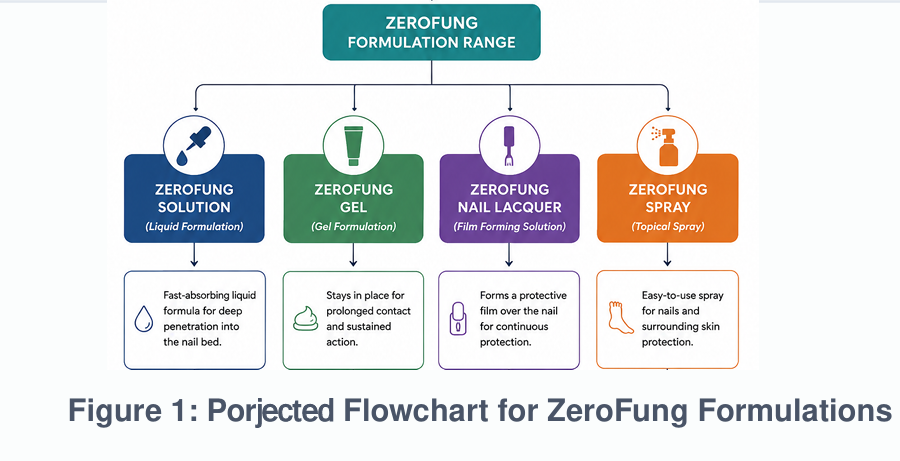
Figure 1: Projected Flowchart for ZeroFung Formulations
The transitions of bulk oil phases into stable nanoemulsions were achieved using a high-energy, low-surfactant technical matrix.
Oil-in-water (o/w) systems were generated utilizing a strict 2:3 oil-to-surfactant ratio, consisting of 0.2 g bioactive essential oils combined with 0.3 g Polysorbate 80 (Tween 80). The mixture was carefully diluted with 9.5 mL of sterile distilled water, matching a precise final concentration profile of 2% (w/w) active plant oil and 3% (w/w) surfactant stabilizer.
Continuous magnetic stirring at 35°C for 40 minutes created a homogeneous coarse pre-emulsion. This mixture was subjected to high-energy probe sonication for 10 minutes, generating disruptive hydrodynamic shear forces that broke the macro-droplets down into the nanoscale regime.
Droplet dimensions and uniformity metrics were characterized using a Zetasizer Nano Series S particle-size analyzer using Dynamic Light Scattering (DLS) at a stabilized optical temperature of 25.1°C.
Initial disc diffusion screening (15 µl/disc, 24-hour incubation at 37°C) mapping the raw antimicrobial power of seven individual candidate bulk oils yielded contrasting results.
Raw Oregano and Lemongrass oils achieved supreme performance metrics, demonstrating complete inhibition zones extending across the entire plate boundary (80 mm).
In contrast, Cinnamon oil showed a moderate zone of 45 mm, while Tea Tree and Clove oils demonstrated limited, narrow clear zones of 20 mm. Carrier lipids such as Argan oil and sensory fragrances such as Night Dream exhibited 0 mm zones, confirming a complete absence of baseline antimicrobial action.
When tested against isolated fungal yeast strains, the performance of the bulk essential oils dropped dramatically. No single bulk oil exceeded a 25 mm zone, indicating that raw hydrophobic molecules cannot diffuse efficiently through standard agar matrices to eliminate fungal cell walls.
Lyophilized probiotics evaluated via specialized well-diffusion setups demonstrated no autonomous clearing zones (0 mm), though they produced notable green pigments on the agar.
Crucially, combining probiotics with complex bulk oil mixtures yielded synergistic benefits, increasing the zone from 38 mm to 40 mm in Oregano-Lemongrass-Argan matrix blends, and from 40 mm to 50 mm when supplemented with Cinnamon.
| Tested active compound or blend | Microorganisms zone | Microorganisms profile | Pathogenic yeast zone | Yeast profile |
|---|---|---|---|---|
| Bulk Oregano Oil (Raw) | 80 mm | Complete inhibition | 20 mm | Little inhibition |
| Bulk Lemongrass Oil (Raw) | 80 mm | Complete inhibition | 25 mm | Little inhibition |
| Bulk Cinnamon Oil (Raw) | 45 mm | Moderate inhibition | 10 mm | Little inhibition |
| Bulk Probiotics Alone (Well Diffusion) | 0 mm | No inhibition | 0 mm | No inhibition |
| Oregano + Lemongrass + Argan Blend | 38 mm | Moderate inhibition | 10 mm | Little inhibition |
| Oregano + Lemongrass + Argan + Probiotics | 40 mm | Moderate inhibition | 5 mm | No inhibition |
| Oregano + Lemongrass + Cinnamon + Argan + Probiotics | 50 mm | Moderate inhibition | 15 mm | Little inhibition |
Fabricating these botanical agents into nanoemulsions resolved their baseline diffusion and efficacy limits.
DLS analytics confirmed that the Oregano/Lemongrass nanoemulsion achieved excellent integration, featuring a Z-average diameter of 148.5 nm and a narrow PDI of 0.272. The Cinnamon/Lemongrass framework generated larger droplets measuring 314.1 nm with a PDI of 0.279.
Bio-assays comparing these nanoscale vehicles revealed unmatched antifungal activation. The Oregano/Lemongrass nanoemulsion produced a near-complete clearing zone of 74 mm against pathogenic yeast—a massive increase compared to its bulk constituent baseline.
The Cinnamon/Lemongrass system also performed exceptionally well, yielding a clearing zone of 70 mm. This indicates that sub-micron structural transformation enhances molecular dispersion and active delivery across lipid bilayers.
Interestingly, antibacterial parameters for the nanoemulsions were slightly lower than the raw bulk mixtures, ranging between 20 mm and 31 mm. This modest reduction is an acceptable trade-off for the substantial gain in stability, minimized skin irritation, and vastly superior antifungal performance.
| Nanoemulsion system | Z-average diameter | PDI value | Gram-positive zone | Gram-negative zone | Yeast fungal zone |
|---|---|---|---|---|---|
| Oregano/Lemongrass | 148.5 nm | 0.272 | 20 mm (Little) | 31 mm (Moderate) | 74 mm (Near-complete) |
| Cinnamon/Lemongrass | 314.1 nm | 0.279 | 15 mm (Little) | 25 mm (Little) | 70 mm (Moderate) |
Key technical insight: The significantly smaller droplet architecture of the Oregano/Lemongrass formulation (148.5 nm) maximizes surface-area-to-volume distribution, yielding superior physical stability and enhanced membrane-disrupting delivery.
The ZeroFung ecosystem is uniquely positioned for rapid commercial deployment and commercial scaling.
By utilizing a low-energy setup during pre-emulsion alongside standard commercial sonication systems, manufacturing can be scaled up efficiently without costly infrastructure investments.
The high margins inherent to premium organic dermo-cosmetics ensure short capital payback windows.