

Details
35
0
Save
Written by Matej Kliman (Bohemian Center)
1 hour
Apr 30, 2026
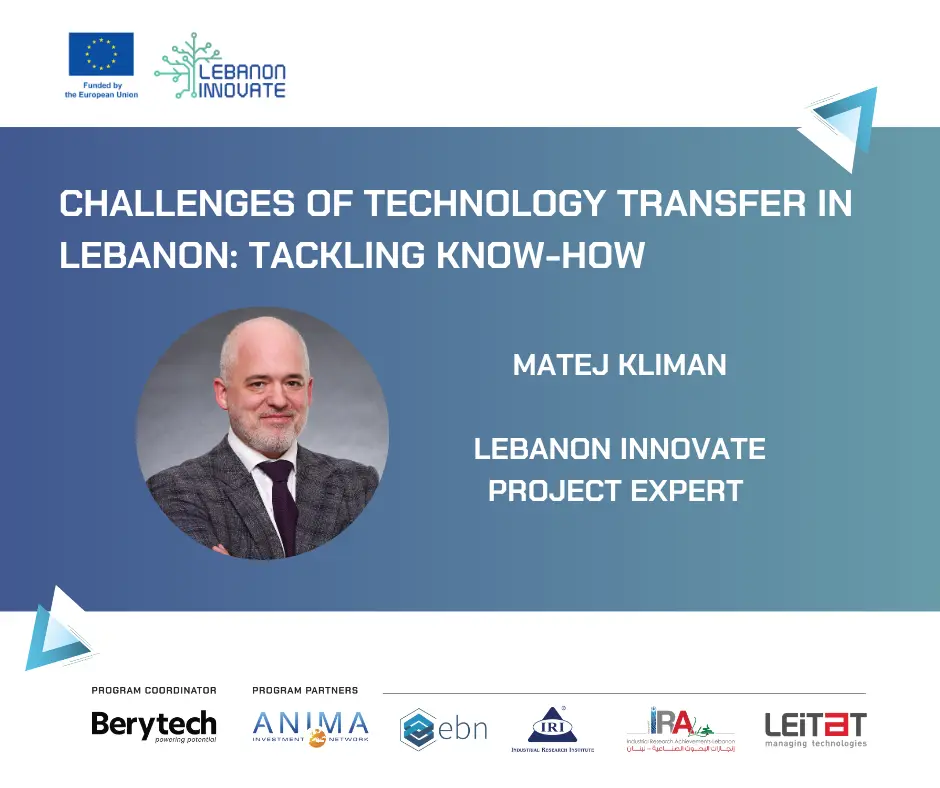


Written by Matej Kliman (Bohemian Center)
Introduction
In the landscape of global technology transfer, know-how represents a nuanced and often undervalued asset derived from research and development (R&D). Unlike traditional forms of intellectual property (IP) such as patents or copyrights, know-how encompasses a set of knowledge and skills that are critical for practical application across various industries. In Lebanon, where universities are increasingly initiating technology transfer initiatives, there lies an important opportunity to recognize and properly harness know-how as a vital component of innovation and economic development. This article explores the challenges associated with the transfer of know-how in Lebanon, along with strategies that universities can adopt to address these issues effectively.
Understanding Know-how
For the purposes of this discussion, know-how is defined as the collection of knowledge and skills acquired through R&D that possess potential practical applications but are kept confidential or are not widely disseminated. Various categories of know-how emerge in this context:
1. Pre-Invention Know-how: This type represents the knowledge that exists in the developmental stage prior to formal invention or patenting. It is essential for advancing R&D projects until they reach the patent application phase.
2. Standalone Know-how: This category includes knowledge that is unlikely to be patented due to not meeting patentability criteria or strategic decisions within the institution regarding patenting. Examples may include methods to treat specific materials or patient treatment methodologies that fall outside the realm of patentability.
3. Ancillary Know-how: Often accompanying patents, this type refers to knowledge that aids or optimizes the use of a patented invention, even though it may not be included in the official patent documentation.
The Two Pillars of Know-how Protection
In order to effectively protect know-how, particularly in university settings, two fundamental pillars must be embraced: identification and proof, as well as confidentiality.
Identification and Proof
To safeguard know-how, it is essential to adopt practical tools that facilitate both identification and proof of its existence. Universities often encounter barriers such as:
Neglect of Know-how: In an academic environment focused on knowledge dissemination, the importance of know-how is frequently overlooked. As a result, valuable information may be inadequately documented or valued.
Unregulated Laboratory Material Flow: The movement of lab materials can often occur without appropriate oversight, increasing the risk of knowledge dilution or loss.
Insufficient Documentation: Laboratory work is often not systematically recorded, making it difficult to establish a clear account of developed know-how.
Inadequately Regulated Cooperation: R&D partnerships often lack robust contractual frameworks from project inception to execution, which compromises the protection of know-how.
To enhance protection, universities can utilize several tools, including:
Lab Reports and Journals: Systematically documenting lab activities to create a reliable knowledge repository.
Project Applications and Reports: Summarizing existing and prospective know-how associated with various research initiatives.
Material Transfer Agreements (MTAs): Establishing legal frameworks for the transfer of materials that might contain know-how or other IP.
Cooperation Agreements: Clearly delineating background and foreground IP in collaborative R&D efforts.
Employee Contracts: Distinguishing between individual contributions and institutional knowledge.
Keeping it Secret (Confidentiality)
Confidentiality is paramount in maintaining the integrity of know-how. The following tools can be employed by universities to reinforce secrecy surrounding their know-how:
Employee Agreements: Ensuring that employees adhere to confidentiality obligations regarding IP, including know-how.
IP Policies: Implementing institutional guidelines that encompass measures for protecting know-how.
Non-Disclosure Agreements (NDAs): Legally binding contracts that safeguard sensitive information shared with external parties.
R&D Cooperation Agreements: Protecting existing knowledge and defining new knowledge developed in collaborative projects.
Memoranda of Understanding (MoUs): Serving as preliminary protections during the initial stages of collaborative efforts.
Conclusion
In summary, know-how represents a critical domain in technology transfer that universities in Lebanon must address proactively. By recognizing the value of know-how and implementing strategic measures to identify, document, and protect it, academic institutions can vastly improve their innovation output. The transformation of know-how from an undervalued asset to a robust element of intellectual property strategy can enhance Lebanon's technological landscape, fostering a culture of innovation and entrepreneurship. Establishing effective technology transfer offices equipped with the proper tools and awareness will ultimately contribute to encouraging IP protection and enhancing Lebanon’s role in the global knowledge economy.